
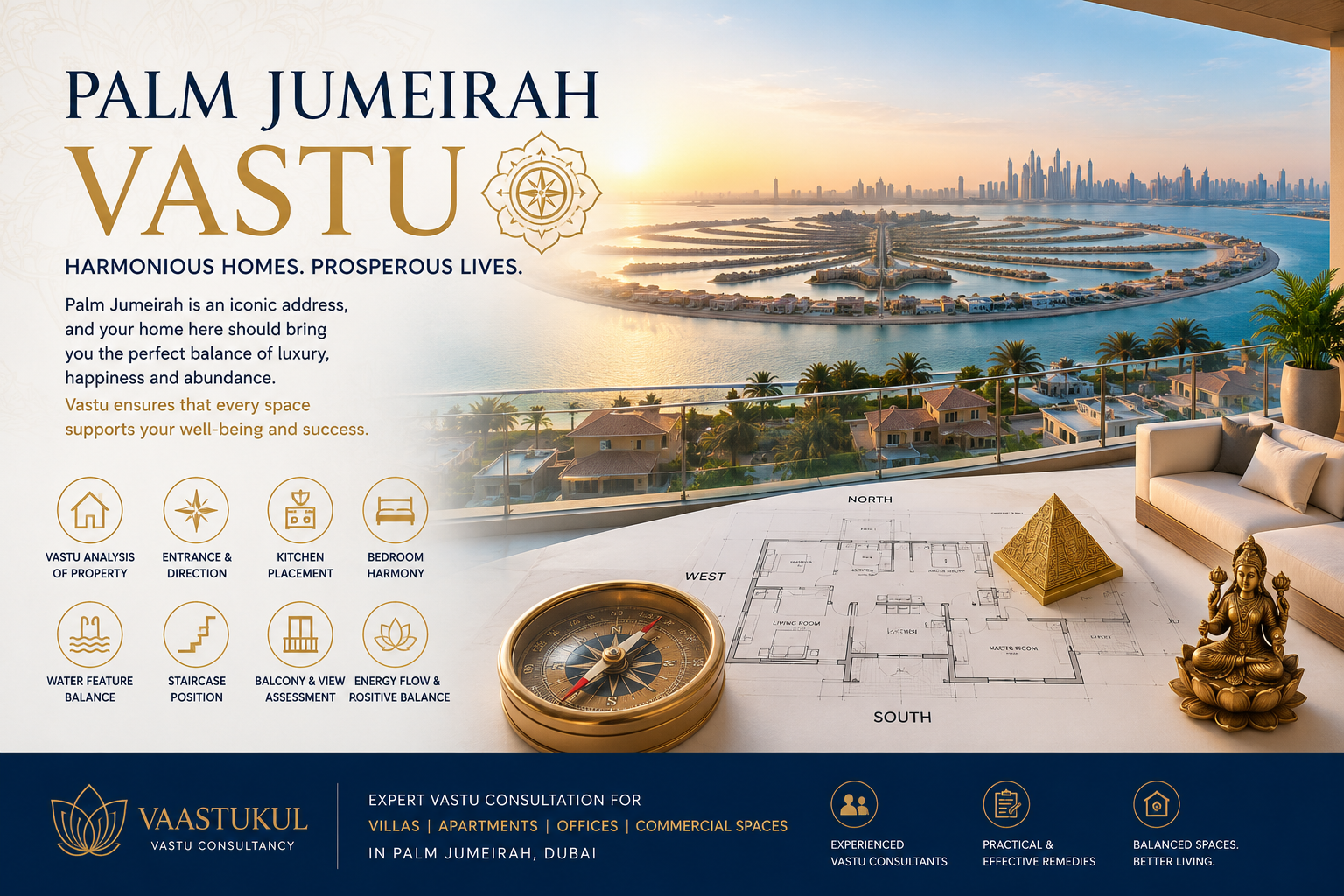
Dubai is a city where ancient meets ultra-modern. Towering glass skyscrapers stand beside traditional wind towers. Minimalist Scandinavian interiors share space with ornate Arabic craftsmanship.

But here’s the fascinating question — how does Vastu Shastra, an ancient Indian science, align with traditional Arabic architecture?
More than you’d think.
🕌 The Shared Philosophy
Both Vastu Shastra and traditional Arabic architecture share one fundamental belief: the built environment directly affects human well-being.
PrincipleVastu ShastraArabic ArchitectureOrientationEast & North facing preferredOriented away from harsh sunVentilationEssential for energy flowWind towers (Barjeel) for natural coolingCourtyardCentral open space for energyInner courtyard (Hosh) for family gatheringWaterNorth-East placement for prosperityFountain in courtyard centerSacred SpaceNorth-East prayer cornerDedicated prayer room (Musalla)Natural LightEast morning light prioritizedMashrabiya screens filter light beautifully
The wisdom of both traditions converges on the same truth — space, light, air, and water must be in harmony for a home to truly nourish its inhabitants.
🌬️ The Wind Tower & Vastu Air Element
The traditional Arabic Barjeel (wind tower) is one of the most ingenious architectural elements in history. It captures prevailing winds from any direction and channels cool air down into the home below.
In Vastu, the air element (Vayu) governs the North-West zone of any home. Proper ventilation in this zone is considered essential for:
- Mental clarity and decision-making
- Healthy relationships and social connections
- Career growth and new opportunities
✅ Modern application: In your Dubai apartment, keep the North-West zone well-ventilated — open windows here regularly, avoid heavy curtains, and place a small fan or air purifier in this corner.
🏛️ The Inner Courtyard — Vastu’s Brahmasthana
Traditional Arabic homes are built around an inner courtyard (Hosh) — an open central space that brings light, air, and family life together.
In Vastu, this central open space is called Brahmasthana — the most sacred zone of any structure. It should be:
- ✅ Open, light, and unobstructed
- ✅ Free of heavy furniture or construction
- ✅ The energetic heart of the home
✅ Dubai villa tip: If you live in a villa with a central courtyard or majlis area — keep it open and uncluttered. This is your home’s Brahmasthana — its energetic powerhouse.
💧 The Courtyard Fountain — Perfect Vastu Alignment
Almost every traditional Arabic home features a central fountain in the courtyard. This is extraordinary from a Vastu perspective:
- Water in the center-North activates wealth energy ✅
- The sound of flowing water promotes mental peace ✅
- Negative ions from water features purify the air ✅
- The visual of water creates calm and abundance ✅
Modern Dubai villas and compounds often retain this feature — and it is perfect Vastu, even if it wasn’t consciously designed that way.
🪟 The Mashrabiya — Light Filtering & Privacy
The Mashrabiya — ornate wooden lattice screens — are perhaps the most iconic element of Arabic architecture. They filter harsh sunlight while maintaining ventilation and privacy.
From a Vastu perspective:
- They prevent harsh direct sunlight from overheating the home
- They maintain gentle, diffused light — which is sattvic (pure) energy
- They create beautiful geometric patterns that energize the space
✅ Modern application: If your Dubai apartment has large west-facing windows that get harsh afternoon sun — install sheer curtains or decorative screens to diffuse the light. This is both Vastu-aligned and quintessentially Arabic in aesthetic.
🕌 The Prayer Room — Vastu’s Sacred North-East
Every traditional Arabic home has a dedicated Musalla (prayer room) or at minimum a designated prayer corner. In Vastu, the North-East is the zone of spirituality, wisdom, and divine connection — the ideal location for any sacred space.
✅ Whether you are Muslim, Hindu, or of any faith — dedicating your North-East corner to prayer, meditation, or quiet reflection is universally auspicious in Vastu.
🌟 Final Thoughts
Vastu and Arabic architecture are not in conflict — they are complementary wisdom traditions that both arrived at similar conclusions through centuries of observation and experience.
Living in Dubai gives you a unique opportunity to honor both traditions simultaneously — creating homes that are not just beautiful, but deeply, energetically alive.
Tags: #Vastu #ArabicArchitecture #Dubai #UAEHomes #VastuShastra #IslamicArchitecture #DubaiDesign #VaastuKul

0 Comments